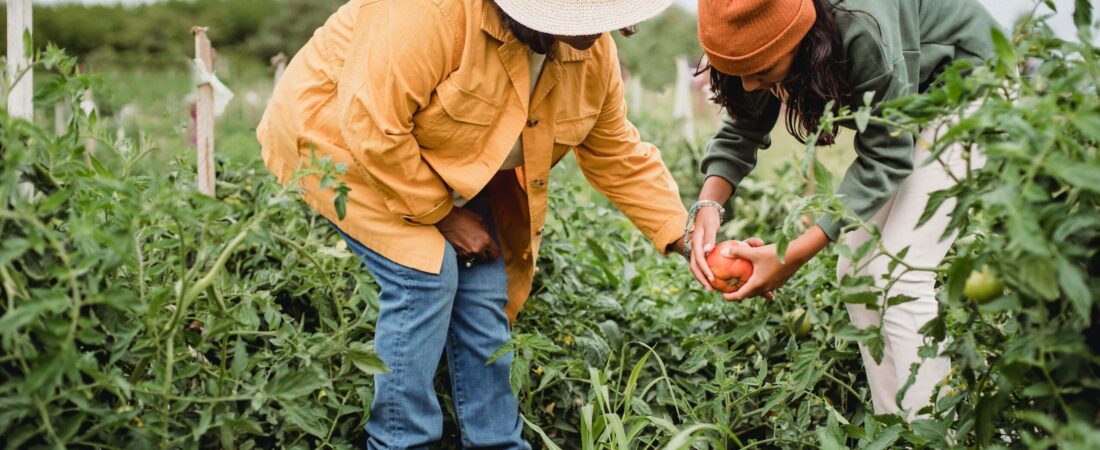
One of humanity’s oldest ideas about land is helping new farmers who can’t afford to buy in,
so why is it being undercut by the U.S. Department of Agriculture?
When people hear that I helped start a nonprofit land trust to hold land “in common,” they often seem to picture a novel experiment in shared ownership. While we worked hard to innovate and expand the practice of collective landholding, and were even awarded a $12 million dollar grant from the U.S. Department of Agriculture to do so, the truth is almost the opposite.
Holding land in common is one of the oldest arrangements people have had with each other. For most of history, in most places, land was not a commodity you bought and sold so much as a shared inheritance you belonged to and were responsible for. Forests, pastures, fishing grounds, and water were largely stewarded day-to-day by the communities that depended on them. This is not to say life was at all easy or equitable. However, the scale of privatization we have today was not our biggest consideration.
The idea that private, individual ownership is the ideal way to hold land is actually quite recent, and it came at a cost. To cite one well-known example, starting as early as the 12th century, the English enclosure movement converted collective open-field agriculture into private, fenced-in land, the same logic that would be carried abroad through colonialism.
The story of enclosure, dispossession, and the conversion of communal landscapes into tradable assets is very much the history of the modern world. But so is its counter-history: wherever land was taken, people resisted and kept older ways of sharing it alive, and those are the traditions and hard-won lessons we get to build on now.
So what do we actually mean by “the commons”?
The long lineage of the commons (in a short space)
With almost any amount of study, it’s an instant realization that the commons is as ancient as our distant ancestors and as present as the many communities around the world where people still live and work communally. In fact, this history is so vast that we’ll have to fast forward a bit. (But I recommend Governing the Commons by Elinor Ostrom for delving deeper, linked along with a couple of other good reads at the end.)
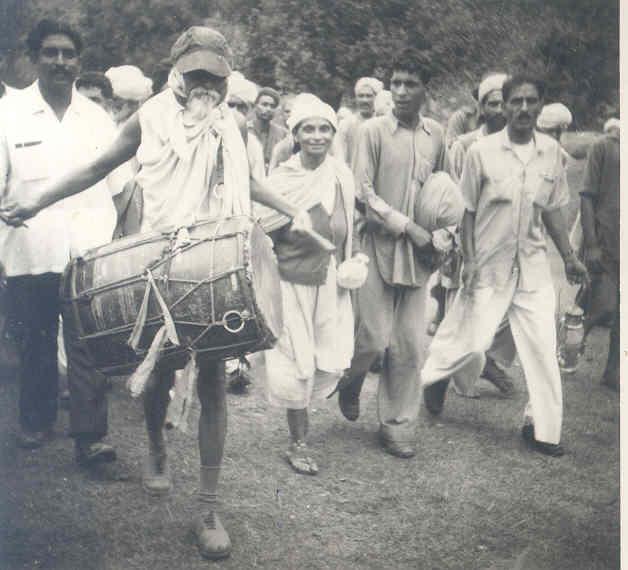
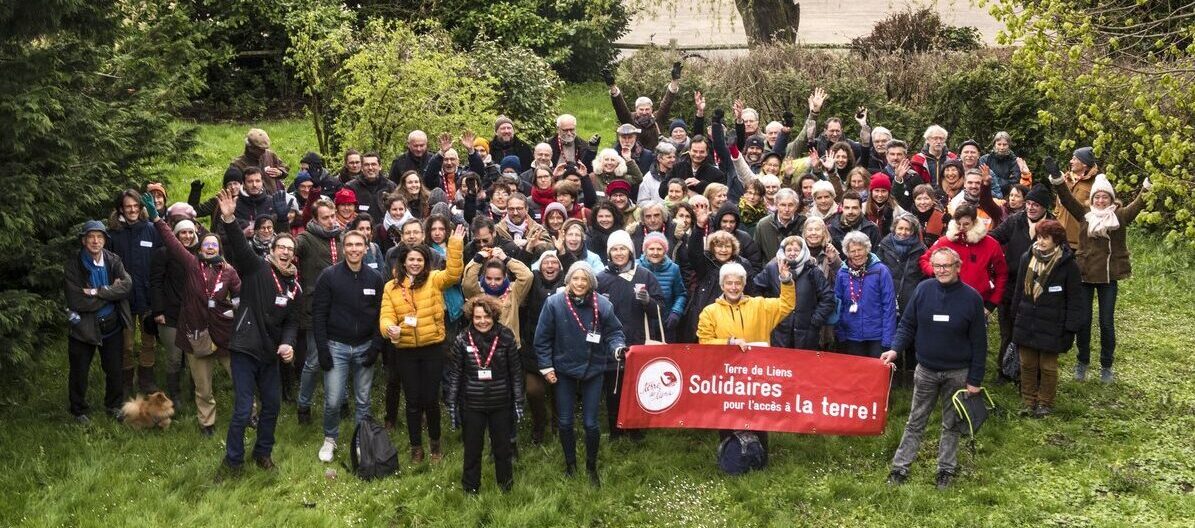
Suffice to say my colleagues and I joined a long line of people trying to free land from plunder and speculation. There’s the American Henry George, who argued more than a century ago that land’s value belongs to the community that creates it, asking, “How can a man be said to have a country when he has not right of a square inch of it?” There’s Vinoba Bhave, who walked across India asking landowners to gift land to the poor. More recently, there’s the organization Terre de Liens in France, placing farmland into a national trust. And, most relevant to this discussion, there’s the community land trust (CLT) model in the United States and its expansion over several decades. Particulars aside, these are different ways of advocating for the commons.
What (and where) are community land trusts today?
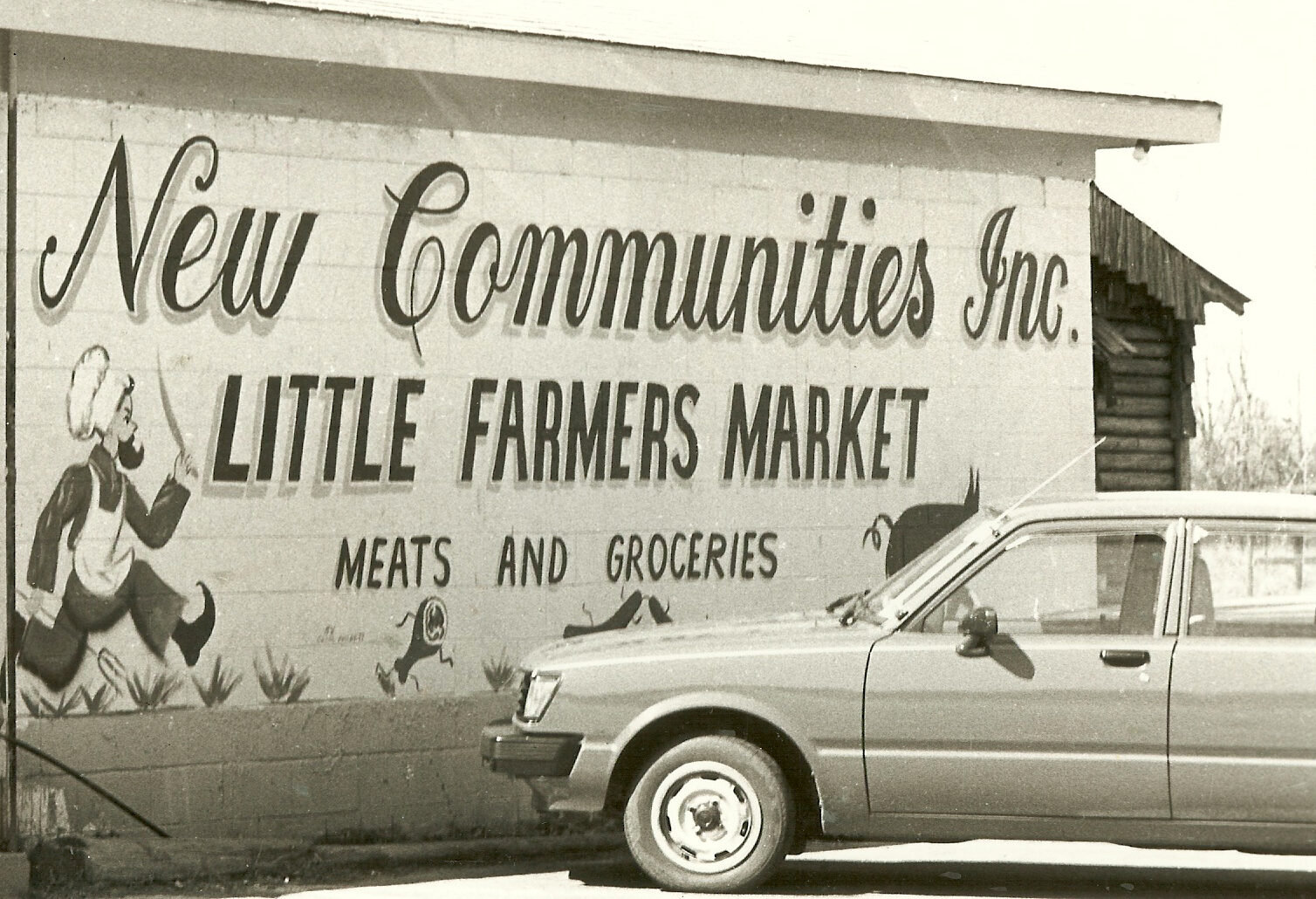
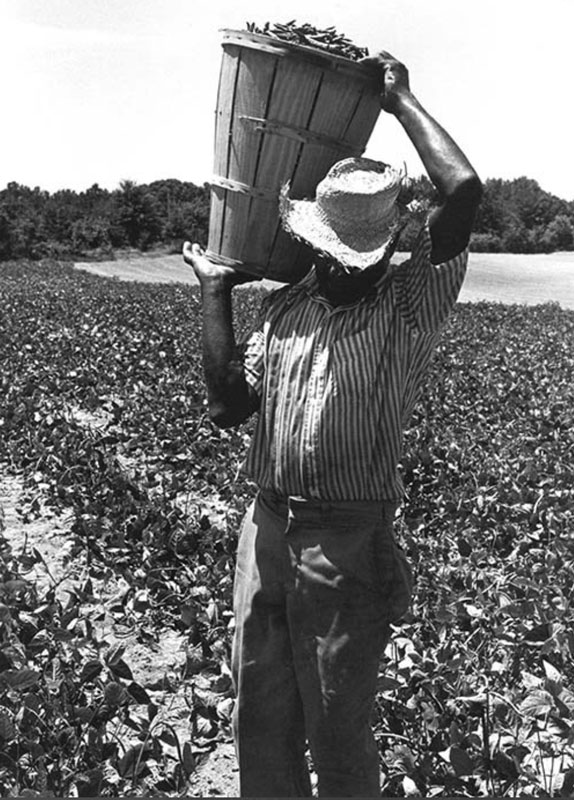
The first community land trust in the U.S., New Communities Inc., was founded in 1969 in Georgia by Black farmers and civil rights organizers who wanted land that couldn’t be taken from them by a hostile bank or government agency. The model they helped create separates the ownership of land from the use of it: a nonprofit holds the land in trust for the long term, while residents or farmers hold secure, affordable, long-term leases. Today that basic model helps create affordable access to homes for families in cities across the country.
I say “cities” because CLTs are most common in urban environments. While the model originated in a rural setting, the vast majority of CLTs operate in cities and metropolitan areas to address gentrification, prevent resident displacement, and provide permanently affordable housing. Most of the over 300 CLTs nationwide focus on residential housing and many frequently partner with municipal governments to access vacant public land, property tax exemptions, or funding from local housing bonds. While rural CLTs exist, often focusing on agricultural preservation or affordable homeownership, they make up a much smaller fraction of the overall CLT ecosystem today.
A nonprofit to bring community land trusts “back to the land”?
One of the big questions my colleagues and I asked as hopeful co-founders was: what might it look like to bring the community land trust back to its rural roots?
We wondered how we might rely on the CLT model to help conserve farms in perpetuity while transitioning land into the hands of next-generation farmers. How might farmers build equity and wealth through this model? Would conservation easements be part of our toolkit? Were there other legal structures better suited to these goals? We often had more questions than answers.
Agrarian Trust is, by the standards of the preceding lineage, a newcomer. The organization grew out of a series of gatherings of farmers, conservationists, lawyers, and historians that began in 2013–2014, and it became a standalone nonprofit in 2015. I was the organization’s first hired employee, and I later served as Co-Executive Director and then Executive Director. I came in with a background of working directly with farmers on transitioning to sustainable and organic business models and managing large grants, including state and federal awards. I worked alongside a team and board with deep community-development expertise, real estate know-how, and legal experience. Thanks to the many pro bono attorneys who took an interest in our work, we were “lawyered up” from the start. (That helped when we joined a lawsuit against the federal government to challenge the 2025 funding freeze, which we’ll come back to momentarily.)
Unlike most CLTs, Agrarian Trust has focused on farmland. Its particular tool for holding land was what we dubbed the Agrarian Commons: a network of local landholding entities, each governed by a majority-local board, that hold farmland and convey long-term (often 99-year) leases to next-generation farmers. The national nonprofit raises capital, helps secure land, and provides legal and technical support; a local commons board makes the decisions about who farms and how the land is stewarded. Both entities prioritized working with community-oriented, conservation-minded farmers with limited resources and opportunities to own or access land.
But a national organization has its limitations, too. For example, when a nonprofit becomes dependent on federal grants and philanthropy, it’s bound to struggle if those grants are cancelled or priorities change, as they have dramatically just in the past year. Ultimately, whether the commons model can sustain itself depends on the commitment and resilience of the community behind it.
Successes and struggles of the Agrarian Commons – and what comes next
By 2022, the Agrarian Commons network held seven farms across six states, representing more than 415 acres and over $7.2 million in real estate retired from the speculative market and placed into secure, community-based tenure. Roughly three-quarters of the long-term leases went to people that the U.S. Department of Agriculture defined at the time as members of “historically disadvantaged groups” and also to farmers with limited resources; about a third of commons board members identified as people of color, and two-thirds as women, trans, or non-binary. Nearly 2,500 people from 48 states and seven countries chipped in to make our early projects happen. By 2025, the organization grew to have developing projects in 15 states. Agrarian Trust’s work was featured by Reuters, NPR, PBS, The Guardian, and Al Jazeera, among others.
While I was still there, we completed a farm acquisition project that took a huge amount of dedication from everyone involved. To me, it speaks to the power of sticking to the plan even when it gets really tough or, say, takes nearly 800 days from start to finish. Completed in collaboration with a beginning farmer and his family, the project to acquire this farm allows them to focus on growing food for their community instead of paying off debt. But let a farmer tell you in his own words. Take 2 minutes to watch the news coverage below, which also does a great job of explaining the way we approached the commons.
I want to be honest about the rest of the story, too. This work moves in fits and starts. Deals stall. Grants are cut short or rescinded altogether. Legal structures turn out to be more constraining than we hoped. Partnerships between very different kinds of organizations require patience, humility, and a willingness to be changed by each other. Some projects don’t accomplish everything we set out to do. And yet even the “unfinished” projects spark relationships, understandings, and possibilities that outlast any single grant.
That’s especially worth reflecting on now, as the federal government saw fit to cancel a $12 million grant that Agrarian Trust was awarded to expand the Agrarian Commons. This came as part of the cancellation of $300 million in funds for the USDA’s Increasing Land, Capital, and Market Access Program (ILCMA), from which at least 49 of 50 grant awards have been cut as of March 26, 2026.
The awards were cancelled amid repeated allegations of waste and fraud by administration appointees. To my knowledge, the administration has presented no evidence as yet that any such waste or fraud took place on our part. As our grant’s project director last year, I knew where every penny of our $12M was allocated, not to mention the impact that investment would make in rural communities across the country.
It wasn’t the first time we were plunged into uncertainty. In early 2025, we were sideswiped by a federal funding freeze. Along with nearly a third of U.S. nonprofits, we experienced delays and disruptions that undermined not just our projects but our ability to operate. During the freeze, organizations with USDA funding like ours were abruptly stopped from carrying out our five-year grant contracts, which were designed to secure property and foster equitable land access for the next generation of farmers.
In that case, we mobilized quickly and took part as a plaintiff in a lawsuit that achieved a major victory and restored funding.
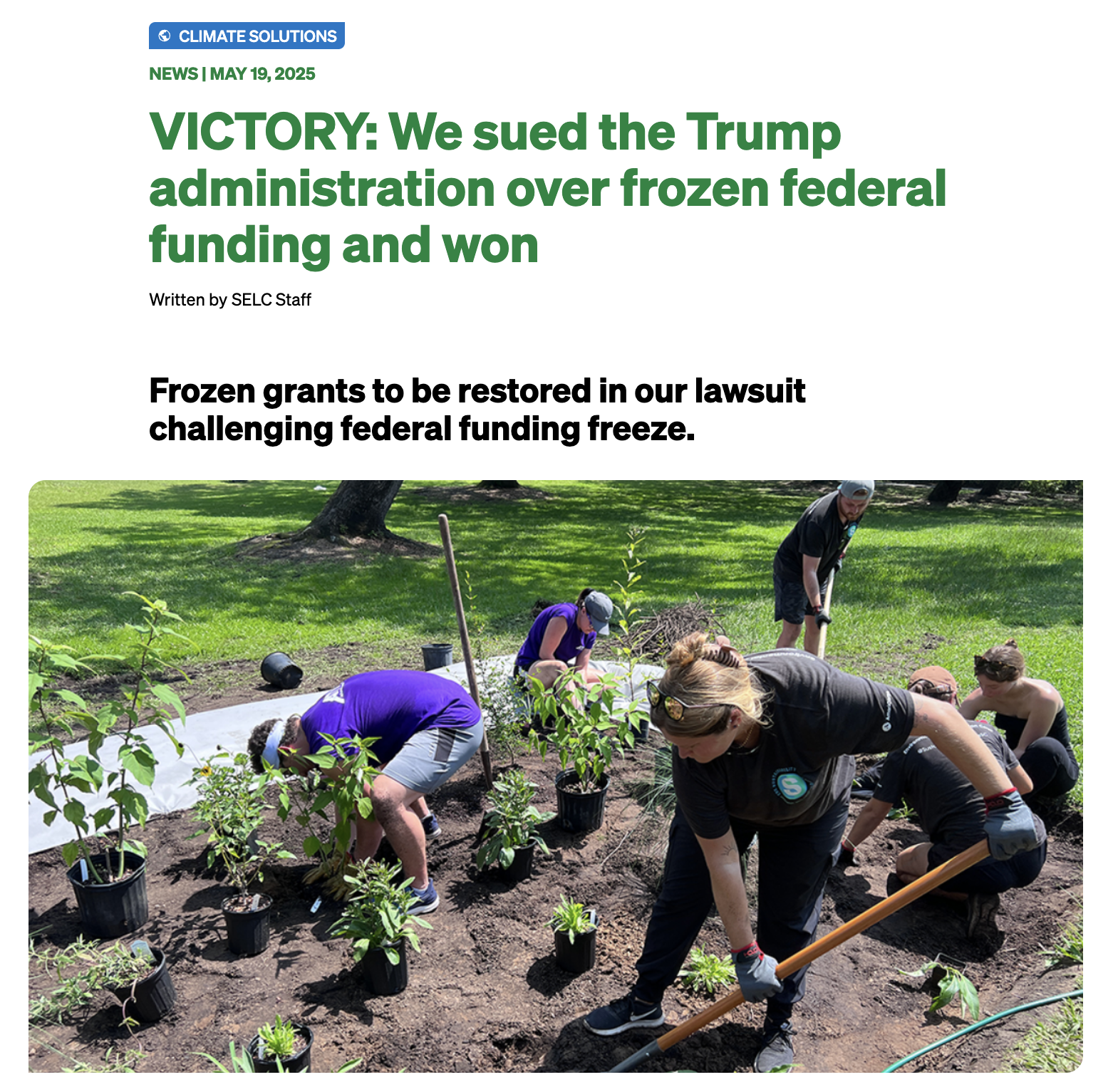
We then acted fast to get as much overdue funding to our partners on the grant as possible. With my fingers crossed for the Agrarian Commons, I sent in a $1.6M request before I left to start my new job. It was funded, thankfully, but not without delays.
But now the same group of USDA-funded organizations have been hit even harder. Fortunately, nonprofit law firms like the Southern Environmental Law Center, which stepped up last time, and Earthjustice, which has this time too, will keep up the good fight. (Just this week, two dozen more grantees, Agrarian Trust included, joined another lawsuit filed last year. In doing so, they hope to secure a preliminary injunction to reverse the cancellations and restore funding.)
Agrarian Trust and its 18 grant partners, most of them nonprofits themselves, stood to use the grant funds to establish Agrarian Commons in rural communities in Nebraska, New York, and Texas, to provide training in regenerative agriculture techniques, and to help protect farms in perpetuity. These are critically important public investments in a country that sometimes loses upwards 2 million acres of farmland to development in a single year. The nonprofit American Farmland Trust estimates that the U.S. loses 2,000 acres of farmland per day. To bring those numbers down to earth, that’s like going on an 8-mile hike around a 2,000-acre square: a pretty boring hike but also pretty scary when you imagine being chased by a paving machine the whole time.
From these numbers alone, you can see why more than just one intervention, say, maybe 50 interventions funded with $300 million, is needed to start solving the land-loss crisis.
With or without federal funding, the groups that have been involved with Agrarian Trust will continue the work in their communities. The farms that became part of the commons through years of hard work will continue to thrive on the love and dedication of the farmers and community members who made owning them possible in the first place.
That’s because “the commons” is as much a practice as it is a legal form or economic concept. Despite the weekly dump truck of bad news, it’s worth looking at the bigger landscape and the long history of the commons. We modern-day commoners are not starting from scratch. We are picking up a very old thread—land and resources held in common, for the good of the community and the Earth—and sewing it into the present. If we sometimes prick our fingers, that’s to be expected; if we make something worthwhile, it’s because we were willing to take that risk.
Further Reading
Elinor Ostrom, Governing the Commons: The Evolution of Institutions for Collective Action (1990), on the design principles for managing shared resources.
David Bollier, Think Like a Commoner (2014), for an introduction to “the commonsverse.”
Derek Wall, The Commons in History: Culture, Conflict, and Ecology (2014), for “an applied history” and case studies from England, India, Mongolia, and the United States.