Last Updated: December 2025
The following is a very brief primer on Covid and Long Covid, as well as the likelihood of developing the latter based on previous infections and major risk factors. Because if you’re here, you probably want to know. But feel free to skip ahead if you’re just looking for the factsheet.
This research is fully cited with peer-reviewed research and was reviewed by author and scholar David Winston, but that does not constitute an endorsement on his or any other source’s part. Any errors or omissions remain my own. I’m obliged to readers with corrections to offer as our knowledge is constantly evolving. Lastly, I choose to write “Covid” with a capital “C” instead of the all-caps SARS-CoV-2 or COVID-19 abbreviations for “Severe Acute Respiratory Syndrome CoronaVirus 2 of 2019.” While it’s correct to think of Covid as an all-caps public health issue, writing it that way is distracting. However, when citing sources, I’ve kept the original spellings.
The “19 Reasons” factsheet below is available as a printable PDF. But first, some context and a few notes. As of this writing (in December 2025), most of us have heard that Covid has become endemic around the world. According to the definition shared by schools of medicine and public health worldwide, an infectious disease is considered to be endemic when its rate of infection is constant and predictable, meaning it is constantly present at a baseline level in a particular population or area. Well-known examples include the common cold or malaria in certain regions. But predictability doesn’t mean a disease is mild. An endemic disease can be associated with any level of severity and mortality as long as the infection rate is stable over time.
So, Covid is endemic, and fortunately it is often mild these days, but with a sort of proviso: It can still be pretty bad on an individual level. At a population level, it can still get worse or vary in severity from place to place as it continues to mutate. (Remember the “razor blade throat” symptom in spring and summer 2025? It was associated with the Nimbus subvariant and mostly reported in the U.K., U.S., and China.)
And this is all a long-term process. A team of researchers put it this way in an article for Nature Reviews Microbiology (emphasis mine): “In the absence of eradication, the virus will likely become endemic, a process that could take years to decades… Meanwhile, focusing on the epidemiology of the pathogen, it is important to bear in mind that the transition from a pandemic to future endemic existence of SARS-CoV-2 is likely to be long and erratic, rather than a short and distinct switch, and that endemic SARS-CoV-2 is by far not a synonym for safe infections, mild COVID-19 or a low population mortality and morbidity burden.”
Taking a Long View of Long Covid
In a May 2020 interview that proved prescient, the famed virologist Peter Piot, then the Director of the London School of Hygiene and Tropical Medicine, observed: “This is an underestimated ability of the virus: It can probably affect all the organs in our body. Many people think COVID-19 kills 1% of patients, and the rest get away with some flulike symptoms. But the story gets more complicated. Many people will be left with chronic kidney and heart problems. Even their neural system is disrupted. There will be hundreds of thousands of people worldwide, possibly more, who will need treatments such as renal dialysis for the rest of their lives.”1
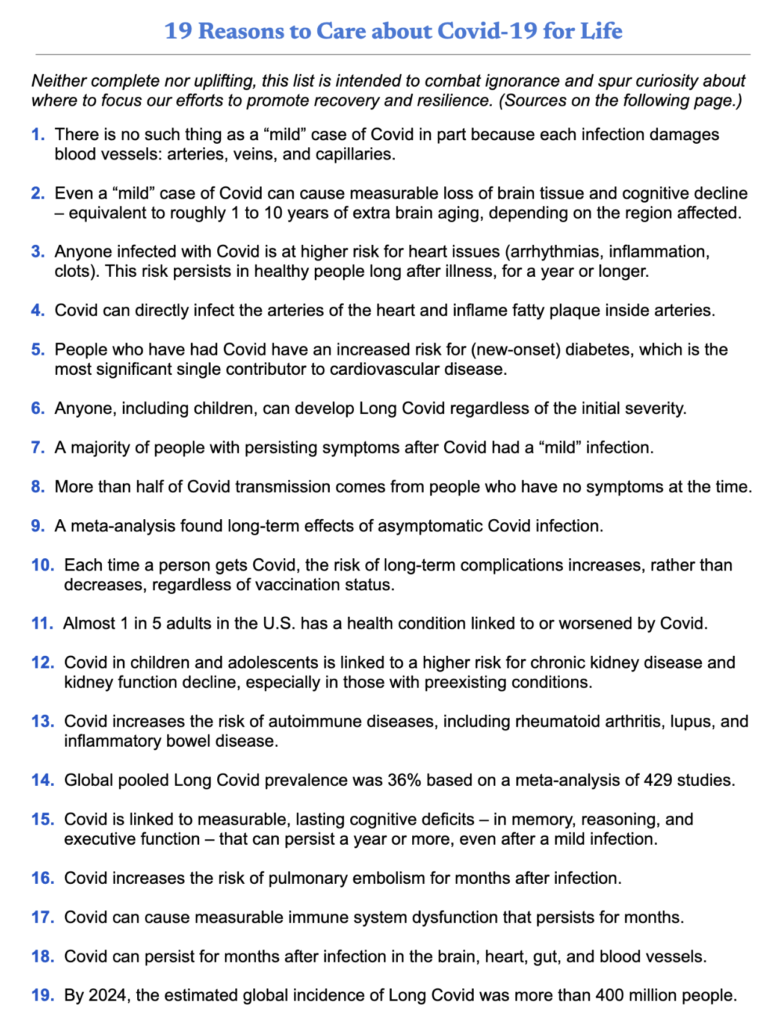
By 2023, the reported number of cumulative Covid infections globally totaled over 762 million confirmed cases. However, the actual number of infections is significantly higher, as many cases were mild, asymptomatic, or went untested. Additionally, an article in Nature Medicine estimated that the cumulative global incidence of Long Covid at around 400 million individuals.2
In 2025, another major study found that children and teenagers are twice as likely to develop Long Covid after a second Covid infection as they are after a first-time infection. This study, which included nearly half a million people under the age of 21, emphasized that “even individuals with a mild initial course of illness can develop Long Covid with severe health effects,” and “given the much higher number of people with mild versus severe disease, they make up the great majority of people with Long Covid.”
Here’s the good news: Significant advances in understanding and treating Covid and Long Covid have made it possible to improve if not resolve a wide range of symptoms. Despite Covid’s rap sheet of bodily harms, there are ways to support systemic repair to heal organs and tissues damaged by infection. In addition to the abundant scientific literature, we can also draw guidance from assessment protocols, case studies, and care plans made available online by many generous clinicians. (In the near future, by summer 2026 as the goal, I plan to publish a guide to these resources, so stay tuned.)
A Word on Defining Long Covid
At this time, there is still no universally agreed on definition of Long Covid, a generic term used to describe lasting or chronic symptoms triggered by Covid infection(s). It’s also worth noting that the term did not originate within the science or health professions. Its origins are online within communities of people who first largely described themselves as “long-haulers.” While both terms have been adopted widely, one downside is how they characterize the disease solely based on a vague sense of duration. What does ‘long’ mean? Several weeks? Months? Years? Any or all of the above?
Granted, the term “Post-Covid-19 condition” offered by the World Health Organization may not be much of an improvement. Adding another term to the mix, Post-Acute Sequelae of Covid, or PASC, is frequently used by scientists and clinicians. It’s important because the language we use shapes our thinking. If we assess conditions and approach treatment based on a faulty or incomplete view, we could make it harder for patients to understand their situation, their options, or to get care.
From the hundreds of sources I’ve consulted over the past few years, a consensus appears to define Acute Covid as lasting from initial illness to a few weeks, up to a month; Medium Covid as more than a month (some say longer); and Long Covid as three months to a year or longer. In reality, any duration of illness from Covid can result in long-term impacts.
How Common are Post-Infection Illnesses?
Post-acute infection syndromes have been well documented for more than a century. Think: Chickenpox and Shingles, Strep throat and Rheumatic fever, Mononucleosis (“mono”) and Epstein-Barr Virus (EBV), Borrelia infection and Lyme disease, HIV and AIDS, and the unpleasant list goes on. Covid is just the latest disease to add its aftermath to the mix.
The impact of multiple Covid infections and their sequelae—the longer-term health conditions triggered by previous infections—are becoming increasingly clear though many unknowns remain. What is known is this: every Covid infection presents the risk of Long Covid as it can impact all of our body’s systems.
The bottomline is that Long Covid does not look the same for everyone. Some recover partially, some worsen, some fluctuate, and some don’t even notice symptoms until many months later. About 1 in 10 people infected during Omicron develop Long Covid symptoms after three months. About 80% of those with Long Covid at three months still had symptoms one year later, warning against assumptions about what a typical recovery time may be. Findings like these ultimately support further efforts to identify biological mechanisms, risk factors, and treatment approaches across the subtypes of Long Covid.
What’s the Likelihood of Developing Long Covid?
To briefly round out the other findings, it’s notable that earlier variants also carried higher risk than Omicron. People infected with pre-Omicron variants were about 70% more likely to develop Long Covid than those infected during later Omicron waves. Lastly, as noted females have been more likely than men to develop Long Covid. Across the board, females have been about 50-60% more likely than men to report ongoing symptoms after Covid. Researchers believe this may be related to differences in immune response, hormones, and how autoimmune-like conditions develop, but the exact reasons are still being studied.
Major Patterns in Long Covid
Researchers followed more than 4,300 adults after their first Covid infection, tracking their symptoms for up to 15 months. Most people in the study were female (69%), were infected during the Omicron era, and did not need to be hospitalized, meaning this group largely reflects mild to moderate Covid cases rather than severe illness.
When researchers looked at symptoms three months after infection, about 1 in 10 people (10.3%) met the study’s criteria for Long Covid. Importantly, when they checked again 15 months after infection, the percentage was almost the same (10.9%). In other words, the rate of Long Covid did not meaningfully decline over time in this group. This finding suggests that for a significant subset of people, Long Covid symptoms can be persistent, even after relatively mild initial infections and even from the Omicron period. The study also shows that Long Covid is not rare and is not limited to people who were hospitalized, underscoring that ongoing symptoms can affect any individual long after the acute infection has passed.
People with Long Covid reported familiar symptoms such as fatigue, brain fog, shortness of breath, pain, cough, and changes in smell or taste. When researchers examined blood and immune cells over time—up to more than six months after infection—they found that the Long Covid group showed persistent inflammation and immune activation, unlike people who recovered fully. Specifically, key immune pathways linked to chronic inflammation (including interleukin-6 signaling, the JAK-STAT pathway, metabolic stress, complement activation, and T-cell exhaustion) remained switched on long after the virus was gone. These are the same pathways often seen in autoimmune and inflammatory diseases.
Researchers confirmed these findings in a second, more recent group (2023-2024), showing that this immune pattern persists across different phases of the pandemic. The results suggest that Long Covid is not simply lingering damage or anxiety but a biologically measurable condition marked by long-term immune dysregulation. The study also points to potential biomarkers and treatments, inspiring hope for more effective therapies in the future.
Both of these studies provide foundational insights that can inform our strategies for recovery and building greater resilience. While every Covid infection comes with potential long-term effects and the chronic disease of Long Covid is a reality for far too many, we have tools to help prevent infection and reduce its impact. Long Covid is not a “mystery illness” beyond our ability to understand or ameliorate.
Covid Recovery and Resilience: Focus on the Fundamentals
Among our first lines of defense is addressing the underlying conditions that can make people more susceptible to infection and complications. Especially early in the pandemic, these factors, known unappealingly as “comorbidities,” got much-deserved attention. They need more. To start with, approximately 35% to nearly 40% of U.S. adults have metabolic syndrome—a cluster of conditions that includes high blood pressure, high blood sugar, and excess body fat. One major study suggests an even higher figure, indicating over 72% of U.S. residents may be metabolically unhealthy.13
With at least 1 in 3 adults in the U.S. now considered metabolically unhealthy, some of the most important steps we can take are to embrace and encourage healthy everyday habits from rise and shine to bedtime. Here are a few fundamentals to support recovery and resilience:
- Eat well: Replace simple carbs and sugary beverages with fiber-rich and nutrient-dense foods and water whenever you can and you’re making strides toward fighting disease.
- Stay active: Stay physically active, stay social, and make movement or exercise part of your friendships and family activities, and you’re fighting disease as well as the social isolation that has become all too common in many parts of the world today.
- Stay sunny: Remember that sunshine and good quality sleep complement each other. Get plenty of time outside, and you’re more likely to get plenty of shut-eye in bed. Even on cloudy days, it’s possible to get outdoor light exposure.
- GET GOOD SLEEP: Sleep is so important to immunity and health that it deserves extra emphasis (like bold, all-caps, listen-up-emphasis): Natural light serves as the primary anchor for your body’s internal clock (the circadian rhythm). Exposing your eyes to daylight, especially morning sun, drives chemical processes that boost daytime alertness, regulate mood, and trigger the natural production of the sleep hormone melatonin at night.
- When your eyes take in early sunlight, your brain halts melatonin production for the day and gets a signal to start producing it roughly 12 to 14 hours later. This ensures you feel drowsy at the appropriate time in the evening, leading to a faster sleep onset and deeper, more restorative sleep. Natural sunlight exposure early in the day stimulates the release of cortisol, the “wake-up” hormone that provides energy during the day. Healthy spikes in daytime cortisol suppress its production at night, allowing for better sleep. Daylight exposure also boosts the brain’s release of serotonin, a neurotransmitter that helps you feel calm and focused during the day. This daytime serotonin later acts as a building block, converting into melatonin as night approaches. Lastly, spending time outside allows your skin to synthesize Vitamin D, which is linked to better sleep quality and longer sleep duration.
- Add support: Consider incorporating medicinal herbs, functional foods, and/or nutritional supplements best suited for your constitution, and you’re going above and beyond to aid the body in its daily work of repair, detoxification, and defense.
Today, staying up on the latest scientific research on preventative health practices, nutrients, herbs, and supplements for Covid and Long Covid can be as easy as going to one of several high-quality resources listed below and searching for topics (including specific supplements or herbal remedies) you want to learn more about.
Selected Resources on Covid & Long Covid
Helping people recover from Covid and Long Covid and build resilience requires access to reliable information. While this list is not exhaustive, it includes what I consider to be some of the most reliable and accessible English-language sources currently available.
I also want to note that throughout the pandemic, my family and I have resided in the United States, indelibly shaping my experience and the resources with which I’m most familiar. For the sources and factsheet below, I’ve drawn from the work of researchers and health practitioners across the U.S. while also citing work from around the world thanks to open-access journals and platforms that enable free, immediate, and unrestricted access to scientific data and research.
LitCovid | Website | ncbi.nlm.nih.gov/research/coronavirus
“LitCovid is the most comprehensive resource on the subject, providing central access to 477,413 (and growing) relevant articles in PubMed. The articles are updated daily and are further categorized by different research topics (e.g. transmission) and geographic locations.”
RECOVER Initiative | NIH Research Initiative | recovercovid.org
“RECOVER brings together clinicians, scientists, caregivers, patients, and community members to understand, diagnose, prevent, and treat Long COVID. We’ve created the world’s most comprehensive and diverse group of Long COVID study participants.”
The People’s CDC | Nonprofit Organization | peoplescdc.org
“The People’s CDC is a coalition of public health practitioners, scientists, healthcare workers, educators, advocates and people from all walks of life working to reduce the harmful impacts of COVID-19.”
Your Local Epidemiologist | yourlocalepidemiologist.substack.com
Your Local Epidemiologist is a public health newsletter and science communication platform founded and operated by Dr. Katelyn Jetelina, MPH, PhD and a team of scientists and science communicators. Launched in March 2020 during the start of the Covid pandemic, the platform aims to translate public health science into accessible, actionable information to help people make evidence-based decisions.
Sources
Draulans, Dirk. 2020. “‘Finally, a Virus Got Me.’ Scientist Who Fought Ebola and HIV Reflects on Facing Death from COVID-19.” Science, May. https://doi.org/10.1126/science.abc7042.
Al-Aly, Z., Davis, H., McCorkell, L. et al. Long COVID science, research and policy. Nat Med 30, 2148–2164 (2024). https://doi.org/10.1038/s41591-024-03173-6.
National Academies of Sciences, Engineering, and Medicine. 2024. Long-Term Health Effects of COVID-19: Disability and Function Following SARS-CoV-2 Infection. Washington, DC: The National Academies Press. https://doi.org/10.17226/27756.
- Ziyad, Al-Aly. “Long COVID Puzzle Pieces Are Falling Into Place—The Picture Is Unsettling.” Correctional Health Care Report, Fall 2024. https://www.civicresearchinstitute.com/online/PDF/CHC-2504-05-Long%20Covid.pdf.
- Wisk, Lauren E., et al. “Variability in Long COVID Definitions and Validation of Published Prevalence Rates.” JAMA Network Open. no. 8, vol. 8, 2025. https://doi:10.1001/jamanetworkopen.2025.26506.
Tofarides AG, Christaki E, Milionis H, Nikolopoulos GK. Effect of Vaccination against SARS-CoV-2 on Long COVID-19: A Narrative Review. Life (Basel). 2022 Dec 8;12(12):2057. doi: 10.3390/life12122057. PMID: 36556422; PMCID: PMC9785763.
Magnusson, K., Kristoffersen, D.T., Dell’Isola, A. et al. Post-covid medical complaints following infection with SARS-CoV-2 Omicron vs Delta variants. Nat Commun 13, 7363 (2022). https://doi.org/10.1038/s41467-022-35240-2.
- Du M, Ma Y, Deng J, Liu M, Liu J. Comparison of Long COVID-19 Caused by Different SARS-CoV-2 Strains: A Systematic Review and Meta-Analysis. Int J Environ Res Public Health. 2022 Nov 30;19(23):16010. doi: 10.3390/ijerph192316010. PMID: 36498103; PMCID: PMC9736973.
- Thaweethai, T., Donohue, S.E., Martin, J.N. et al. Long COVID trajectories in the prospectively followed RECOVER-Adult US cohort. Nat Commun 16, 9557 (2025). https://doi.org/10.1038/s41467-025-65239-4.
- Hou Y, Gu T, Ni Z, Shi X, Ranney ML, Mukherjee B. Global Prevalence of Long COVID, Its Subtypes, and Risk Factors: An Updated Systematic Review and Meta-analysis. Open Forum Infect Dis. 2025 Aug 30;12(9):ofaf533. doi: 10.1093/ofid/ofaf533. PMID: 41018705; PMCID: PMC12461872.
Thaweethai T, Donohue SE, Martin JN, Hornig M, Mosier JM, Shinnick DJ, Ashktorab H, Atieh O, Blomkalns A, Brim H, Chen Y, Cortez MM, Erdmann NB, Flaherman V, Goepfert P, Goldman JD, Hamburg NM, Han JE, Heath JR, Jacoby V, Jolley SE, Kelly JD, Kelly SW, Kim C, Krishnan JA, Letts R, Levitan EB, Modes ME, McComsey GA, Metz TD, Mullington JM, Ofotokun I, Okumura MJ, Paredes CC, Patterson TF, Peluso MJ, Reece R, Sherif ZA, Simhan HN, Simmons C, Singh U, Taylor BS, Taylor BD, Trinity JD, Troxel AB, Utz PJ, Vasey AJ, Weinberger E, Wiley Z, Wisnivesky J, Yee LM, Horwitz L, Foulkes AS, Levy BD; RECOVER-Adult Consortium. Long COVID trajectories in the prospectively followed RECOVER-Adult US cohort. Nat Commun. 2025 Nov 17;16(1):9557. doi: 10.1038/s41467-025-65239-4. PMID: 41249167; PMCID: PMC12623977.
- Aid, M., Boero-Teyssier, V., McMahan, K. et al. Long COVID involves activation of proinflammatory and immune exhaustion pathways. Nat Immunol 27, 61–71 (2026). https://doi.org/10.1038/s41590-025-02353-x.
Braun, Ashlea C., Micah L. Hartwell, McKale R. Montgomery, Sam R. Emerson, Katherine T. Morris, and Benjamin H. Greiner. 2022. “Prevalence of Metabolically Healthy Obesity in the United States: A Cross-Sectional Evaluation of the National Health and Nutrition Examination Survey.” Obesity Research & Clinical Practice 16 (6): 536–38. https://doi.org/10.1016/j.orcp.2022.10.009.
Hirode, G., Wong RJ. Trends in the Prevalence of Metabolic Syndrome in the United States, 2011-2016. JAMA. 2020 Jun 23;323(24):2526-2528. doi: 10.1001/jama.2020.4501. PMID: 32573660; PMCID: PMC7312413.
Dissanayake, H. COVID-19 and metabolic syndrome. Best Pract Res Clin Endocrinol Metab. 2023 Jul;37(4):101753. doi: 10.1016/j.beem.2023.101753. Epub 2023 Mar 1. PMID: 36907785; PMCID: PMC9977132.